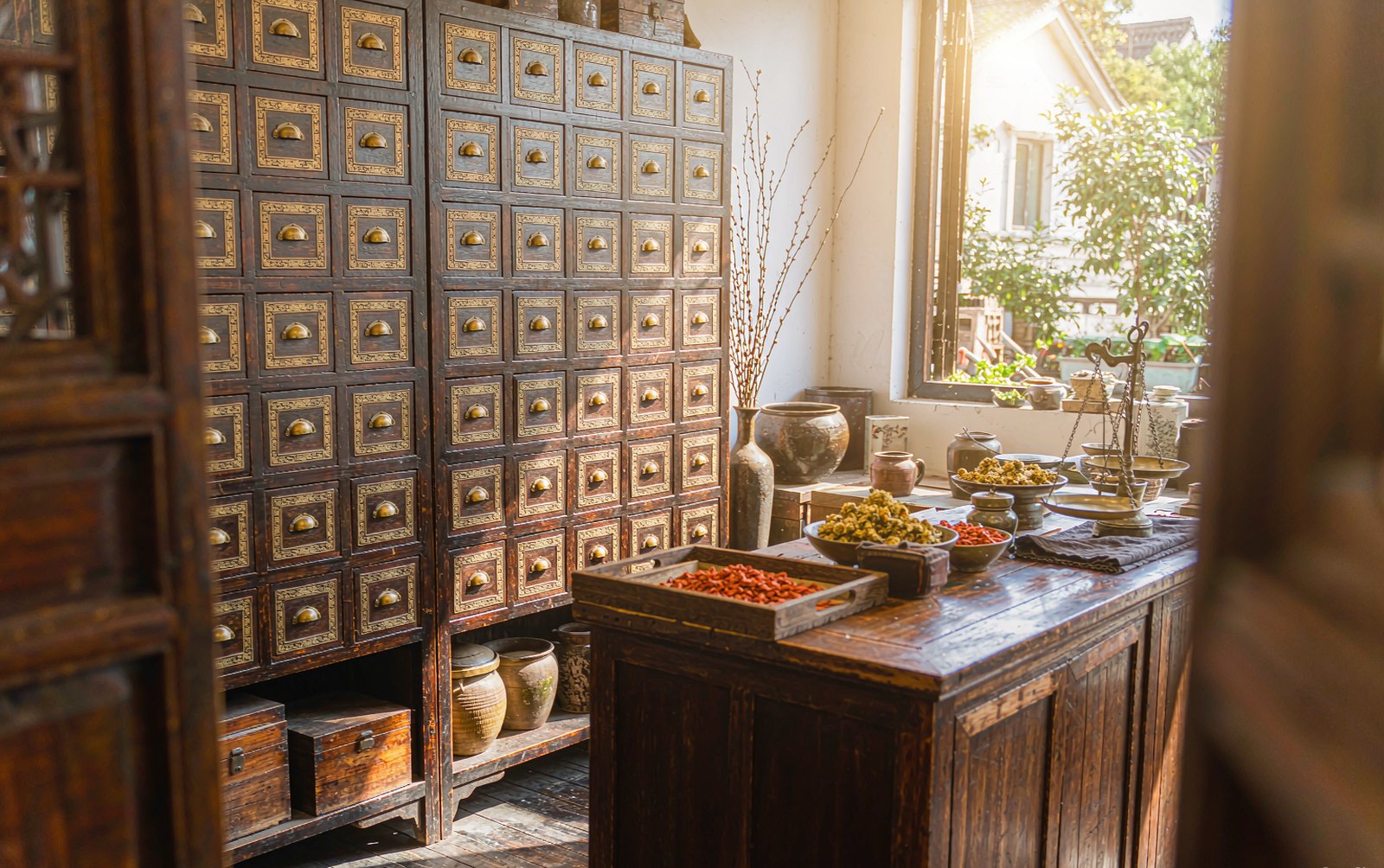
Chinese medicine does not hunt the culprit; it attends to what is happening in you. Influenza A, influenza B, COVID, or an ordinary rhinovirus — I do not care what it is called; I look only at the state your body is in now.
Cold pattern → warm yang and release the exterior, until there is a light sweat. Use warming medicines (fresh ginger, scallion white, guizhi) to add a fire to the body and let the cold leave with the sweat — like heating and airing a cold room.
Heat pattern → clear heat and release the exterior. Use cool medicines (honeysuckle flower, forsythia, gypsum) to clear the heat toxin and let the pathogen out through the surface — like putting out the fire and clearing the smoke from a burning room.
Three questions to ask yourself at home:
If two of the three point the same way, treat it that way. When you cannot tell, err toward warmth rather than clearing heat at random — most people today have a cold constitution at bottom, and chronic coughs from misused cold remedies are everywhere.
This is the most fundamental divergence between Chinese and Western medicine. A piece of wood left in a damp place grows weeds and mushrooms.
| Western medicine | Chinese medicine | |
|---|---|---|
| Focus | The pathogen | The internal environment (cold, heat, damp, dryness) |
| Method | Identify → target and destroy | Differentiate the pattern → adjust the constitution |
| Outcome | The enemy dies, the environment is unchanged, and it returns | The environment changes, there is no soil, and it fades |
Where does dampness come from?
Chinese medicine is not only decoctions. Breathing practice, standing post, baduanjin, taiji, moxibustion, gua sha, cupping, foot soaks, daoyin — all of them do one thing: support upright qi and change the internal environment.
Medicine uses its own force to rouse yang; practice uses your own qi and blood; external treatment uses warmth and the meridians to reopen qi and blood that have been held back. The aim is the same: dry the wet wood so the pathogen itself cannot stay.
For a deep or chronic illness to loosen, the body cannot remain entirely quiet. Medicine brings a healing disturbance (瞑眩, mingxuan); so do standing post, breathing practice, and external treatment. This is what is called a healing reaction (排病反应), or qi striking the diseased site (气冲病灶).
Why does more practice bring more commotion? Because the body was in a pathological equilibrium: the cold pressed deep, and while nothing moved there was no pain; dampness trapped in the spleen, and without provocation there was no reaction. Once upright qi is sufficient it begins to audit the accounts — like a thorough restoration of an old house: sweep the dust first, then carry out the rubbish, then repair the beams. Sweeping raises dust through the whole house; that is renovation, not collapse.
What a healing reaction commonly looks like:
The essential mark is one sentence: temporary, tolerable, and better overall. Afterwards the person is looser, sleeps deeper, has a better appetite, and the old pain is lighter.
How to tell: a healing reaction, or an injury from practice?
| Healing reaction | Injury from practice / mistreatment |
|---|---|
| Brief — hours to a few days | Keeps worsening, does not settle |
| Spirit better afterwards | Increasingly depleted, palpitations, short of breath |
| Old symptoms surface, each time milder | New symptoms keep appearing, local redness, swelling, ulceration |
| Can sleep, can eat, emotions settle | Insomnia, palpitations, a floating sense of unreality |
| Easing the intensity brings relief | No relief even when you stop |
When the constitution is normal, illness leaves of its own accord. First use method to turn the soil, then use daily life to feed it — early nights, following the four seasons, the five grains nourishing the spleen, light labour without exhaustion, less anger and less brooding. When the constitution returns to the “infant state” — warm belly, clear head, soft sinews, quiet spirit — many illnesses that used to recur are not destroyed; there is no soil left, and they simply end.